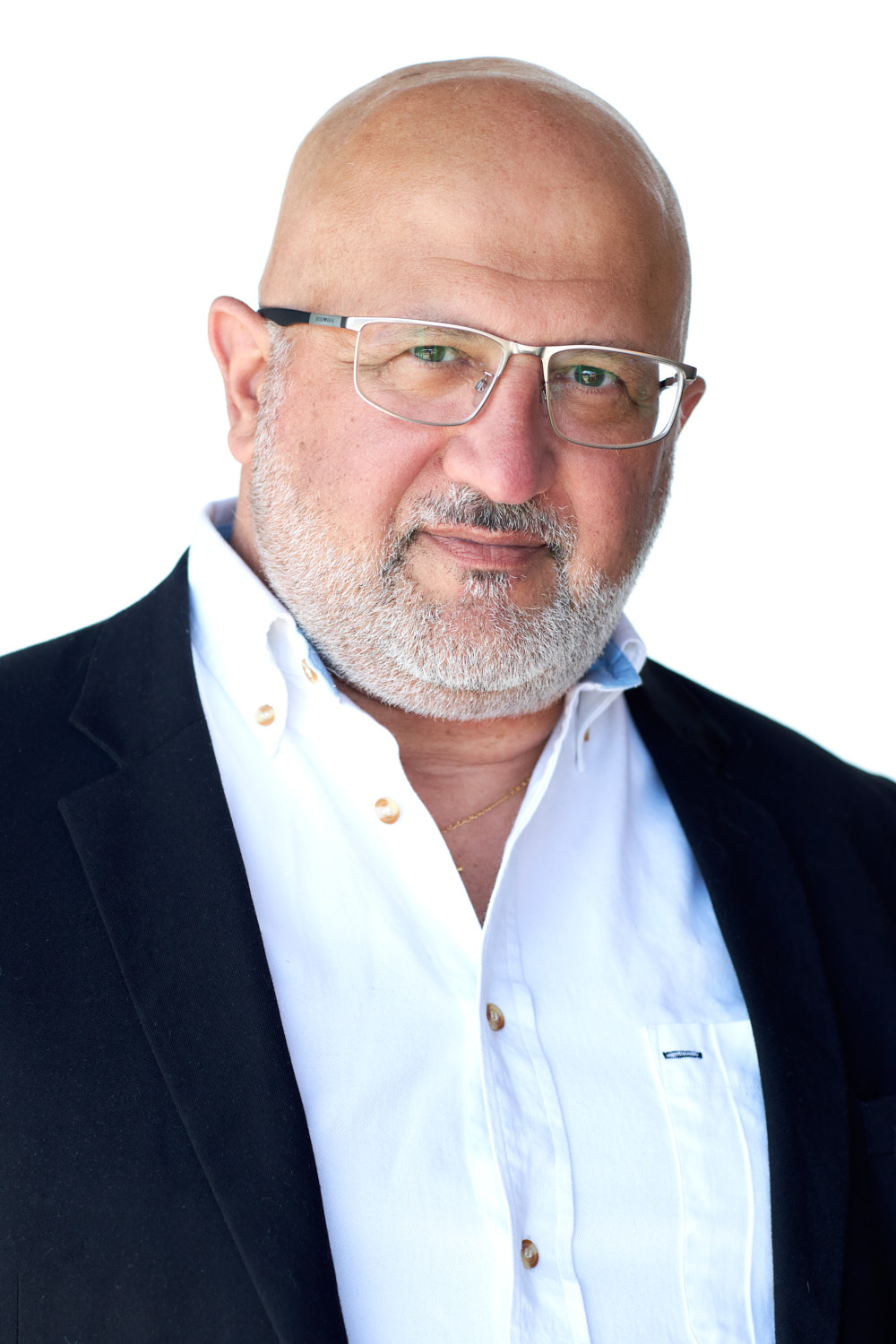
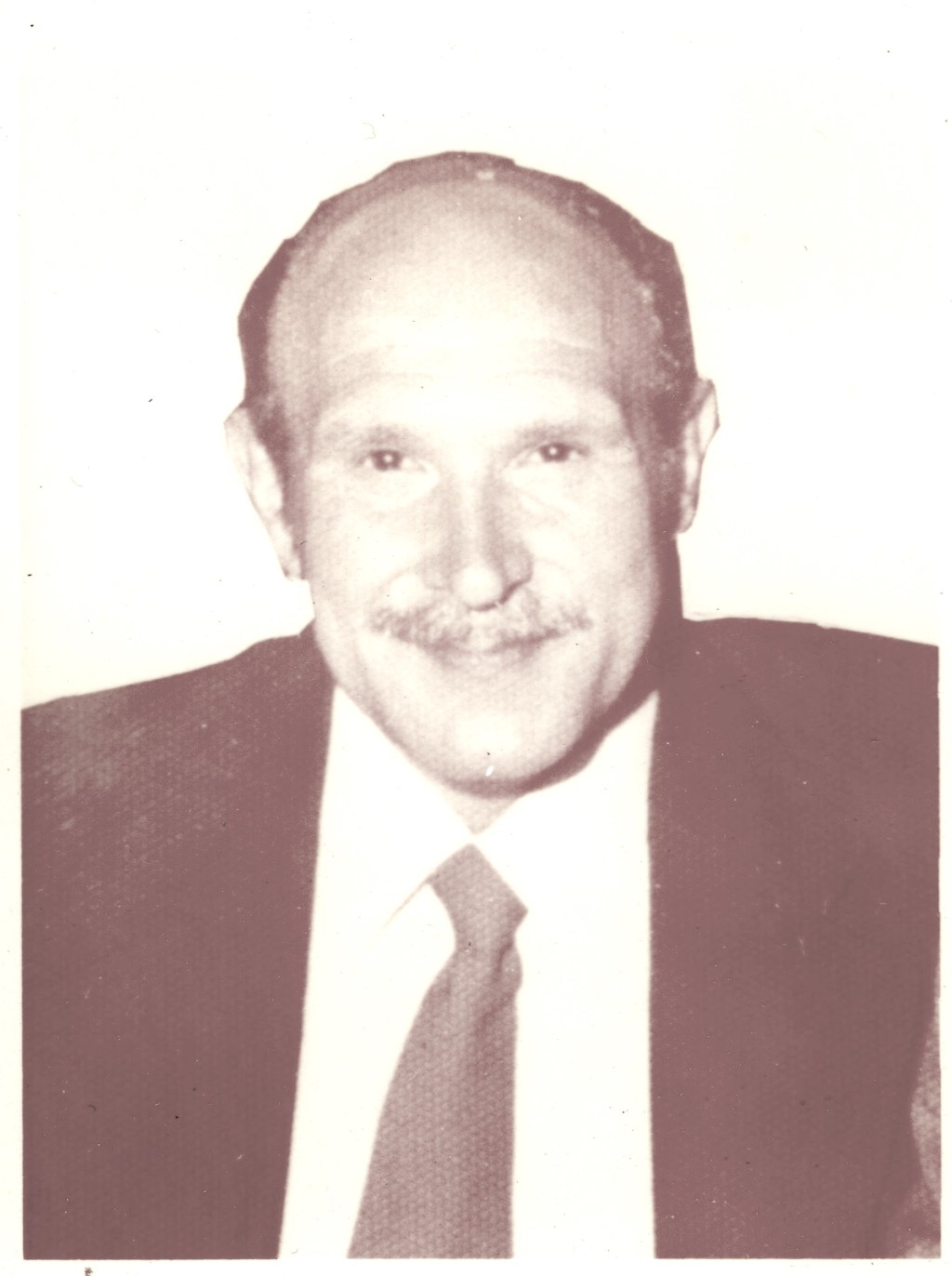
Today, March 2nd, 2024, makes the 100th anniversary of the birth of my father, Guiseppi D’Agata. Sadly, he only lived 53 of those years. So, in deciding to compose this brief reflection on his life, I must come to terms with the fact that, as important as this man was to my existence, I didn’t get the chance to know him very well.
Guiseppi D’Agata was born on March 2nd, 1924, in Alexandria Egypt. Guiseppi’s parents, Gaetano D’Agata and Rosa Balesteri, were expat-Italians, having moved to Egypt from Messina in Sicily, shortly after the Great War. Hence Guiseppi was registered as an Italian citizen. Guiseppi was the second of seven children born to Gaetano and Rosa, five of whom survived to adulthood. However, Rosa, a young widow when she married Gaetano, had a son from her previous marriage. So, in total, there were six surviving siblings in the Gaetano D’Agata household.
My grandfather Gaetano’s modest income as a Clerk of Courts in the judicial system combined with the relatively low cost of living in Egypt at that time, provided the family with a comfortable middle-class existence. The children were all well-educated, although none sought to pursue a professional career. The outbreak of WW2 could have made life difficult for Italian expats living in what was then a British stronghold, but it didn’t seem to create any problems for my father’s family. Interestingly though, Guiseppi’s older brother, who was a British citizen by virtue of Rosa’s first husband being Maltese, joined the British armed forces. So, there was a remote probability that the two brothers could have found themselves on opposing sides of that brutal conflict.
Post war, the rise of Egyptian nationalism made life increasingly difficult for European expats. In the late 1940s, Guiseppi’s older brother and sister decided to pursue a life in the new world. They packed up their young families and migrated to Australia. The 1952 military coup, which resulted in the deposition and exile of Egypt’s King Farouk, sealed the fate of the rest of the family who decided to follow suit.
In 1956, Guiseppi married my mother Theresa Sislian, and my eldest brother was born in April of the following year. By this stage, plans were already underway for the last of the family to migrate to Australia. The last of the family consisted of Guiseppi, Theresa and their baby son, Guiseppi’s younger sister and her husband and his parents. My paternal grandparents were also to make the journey, but tragically my grandmother Rosa suffered a stroke and died at the young age of 61 while still in Egypt. My grandfather Gaetano, who at 77 years of age was much older than Rosa and had been suffering with dementia for several years, made it as far as Naples Italy and died there. My mother was of Armenian descent, and all her family were Egyptian citizens. So, she left her five siblings and her stepmother behind and would not see any of them again for another 23-years.
In early 1958, my parents arrived in Australia and Guiseppi was reunited with the rest of his siblings in Melbourne. Their second child was born later that year, a third in early 1960, a fourth in 1961, and then me in late 1962. Having five children in under six years seemed quite enough but being good Catholics, only natural means of birth control were available to them. For my mother this consisted of a counter where you could click off the days of your cycle. Of course, young children find little plastic devices which have buttons that click and numbers that rotate very fascinating. So, there may have been some occasions where, unbeknownst to her, the counter was tampered with. Subsequently, in 1966, baby number-6 arrived, followed by number-7 in 1971.
Guiseppi supported his family by working as a tradesman in a near-by factory. Money was tight, but there was always food on the table and always room for friends. When I was born, in 1962, the family was still living in a three roomed part house but building of the house proper commenced shortly afterwards with Guiseppi doing a lot of the construction himself.
I have no recollection of the part house, and my memories of my father begin around the time my younger brother was born. I remember having to wait in the car while dad went in to visit my mother in hospital. I remember driving in his old Citroen Traction Avant. This was a very exotic car for a working-class family to have and was so novel, that drivers would wave to each other if they passed someone driving the same car. I remember him always doing work in the house and garden, and often doing overtime at work to help boost the family coffers. I remember going to his work Christmas parties, which always had a carnival atmosphere. Santa would have presents for everyone and I recall that, on one of the later occasions, when the D’Agata family was called to come forward and receive their gifts, someone called out ‘How many this year Joe?’
I also remember my dad being very civic minded. He was involved in several church groups and local community groups. Unlike other migrants of his generation, Guiseppi did not restrict himself to socialising with people from his own ethnic group. Growing up in a cosmopolitan city like Alexandria probably influenced this considerably. For example, when it came time to choose Godparents for my younger brother, he moved away from the tradition of choosing from his siblings and chose a couple of Irish descent whom he’d been friends with at church.
One of my fondest memories is that, despite there always being lots of work to do around the house, there was always time for Sunday drives. Picnics and hikes at Lerderderg Gorge. Going to the beach on summer afternoons and staying till the sun went down. Then visiting the gelati truck at Port Melbourne on the drive home. It was a life of simple pleasures. We also spent many afternoons in Melbourne’s parks and gardens. Guiseppi took full advantage of the ‘Free entertainment in the Parks’ program. Thinking back, it’s surprising that we got to have so many adventures.
In 1977, when ABBA was touring Australia, he even took my younger brother and sister to the Kings Domain so that they could listen to ABBA perform at the Sydney Myer Music Bowl. They couldn’t see them of course, as the venue was fenced off, but as it is an open-air venue, they could hear them well enough. 14-year-old me was too cool to go along as well.
It was later that year when he suffered his fatal heart attack. He’d gone to bed feeling unwell and then felt progressively worse. By the time my mother worked out what was going on, he was gone. I’ve written about this experience in my chapter of ‘A Message to Your Younger Self’ which is the second volume of the ‘We Inspire Now’ anthology series. For some reason, although shocked, 14-year-old me didn’t think it was unusual for someone to die at 53. Perhaps it was because I’d grown up without grandparents, but also because dad’s older brother passed away earlier that year and he too was in his mid-fifties. 61-year-old me now knows for certain that 53 is way to young to die and fully appreciates the absolute tragedy of my mother being widowed at the age of 46 with seven children aged between 6 and 20. Sadly, a similar tragedy would befall me, with my young wife dying of breast cancer in 2012 leaving me to raise three children aged between 8 and 14 on my own.
So that is a brief reflection on the life of my dad, Guiseppi D’Agata written on what would have been his 100th birthday. Given that none of the males in his family have lived beyond 80-years of age, it is highly unlikely that he would still be alive today. In fact, his younger sister is the only one of his siblings that is still alive. My mother also still survives him and is doing okay for a 92-year-old. But it is still a great tragedy that we lost him so soon and I often wonder what life would be like if he had lived at least a couple more decades. I’m sure he would be proud of the fact that all his offspring have gone on to live productive and creative lives. He is survived by his wife Theresa, his seven children, fourteen grandchildren, and six great-grandchildren with two more on the way.


 Stephen D'Agata
Leave a reply to Gaetano D’Agata Cancel reply